


The dry matter asset of Rumiplus
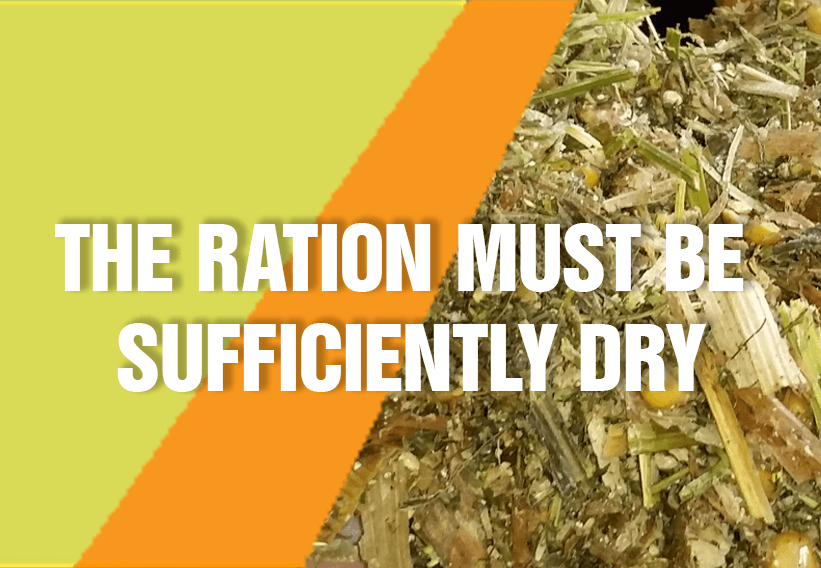
” The ration must be sufficiently dry ! “
|
|
 Breeder’s word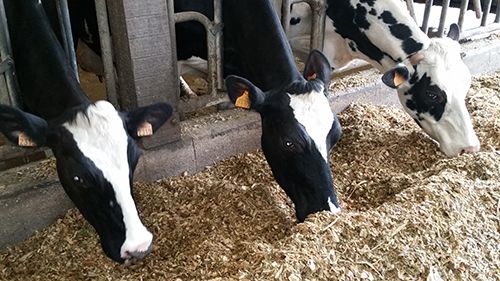
 Expert’s recommendations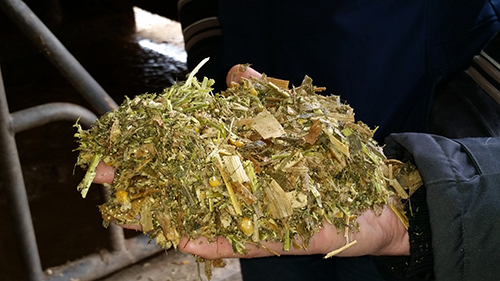

|
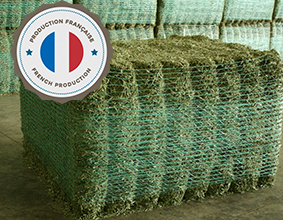
“The 90% DM of the Rumiplus raises the rate of dry matter of the ration.” THE FIBROSITY ASSET OF RUMIPLUS : The passage through dehydration stabilizes the Rumiplus to 90% dry matter, a pledge of absence of losses and alterations. Substituting 6 kg of grass silage with 2 kg of Rumiplus allows the dry matter to be fed from a dairy cow ration of 39% to 43% DM. |
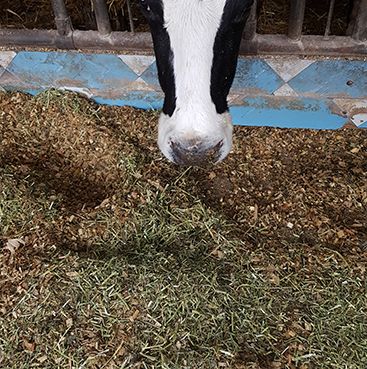
Effective fibers and less fines, for optimal rumination:
FIBROSITE : “To be effective, the long fiber must be short “
POTASSIUM – BACA : “In lactating cow, a positive BACA promotes milk production!”
HEALTH – WELLNESS:HEALTH – WELLNESS: “Well-being by fiber”
Dehydration process Concentrated Alfalfa Extract (CAE)
Dehydration process Concentrated Alfalfa Extract (CAE)
From plant to concentrated alfalfa extracts
Alfalfa naturally rich in proteins, cultivated in North-Eastern France, is used to supply our extraction tools.
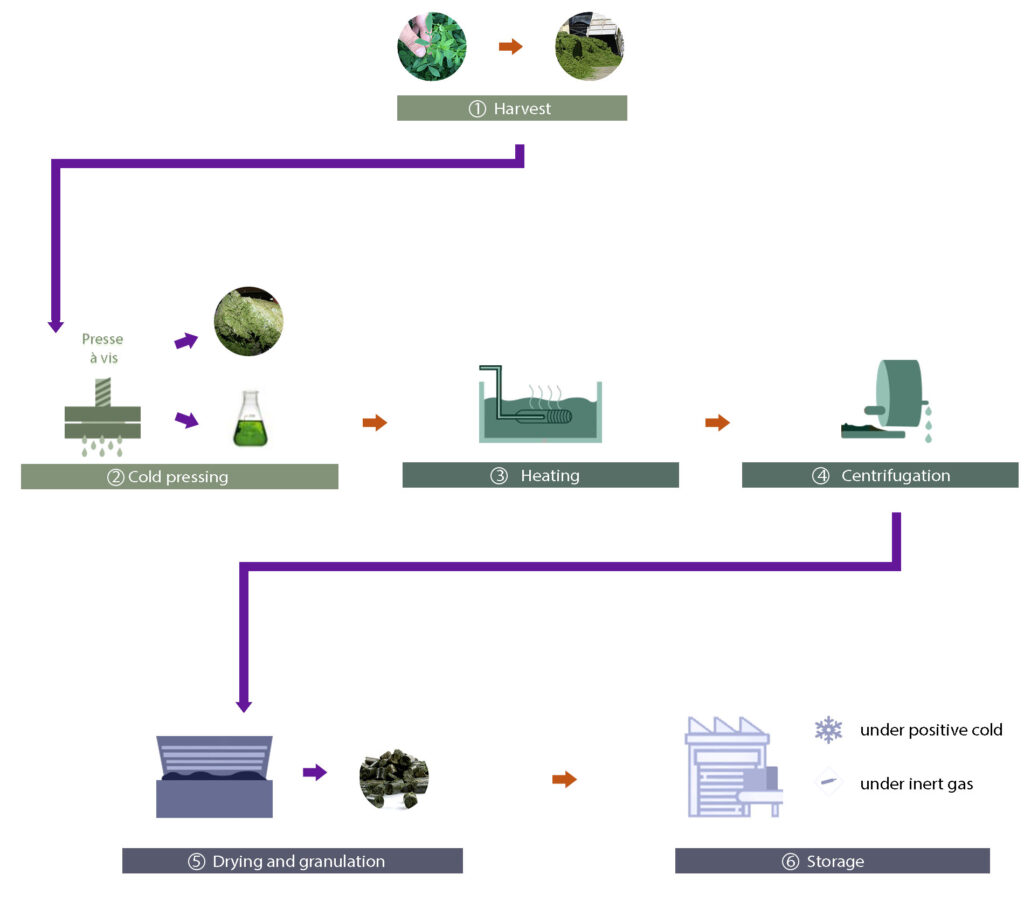
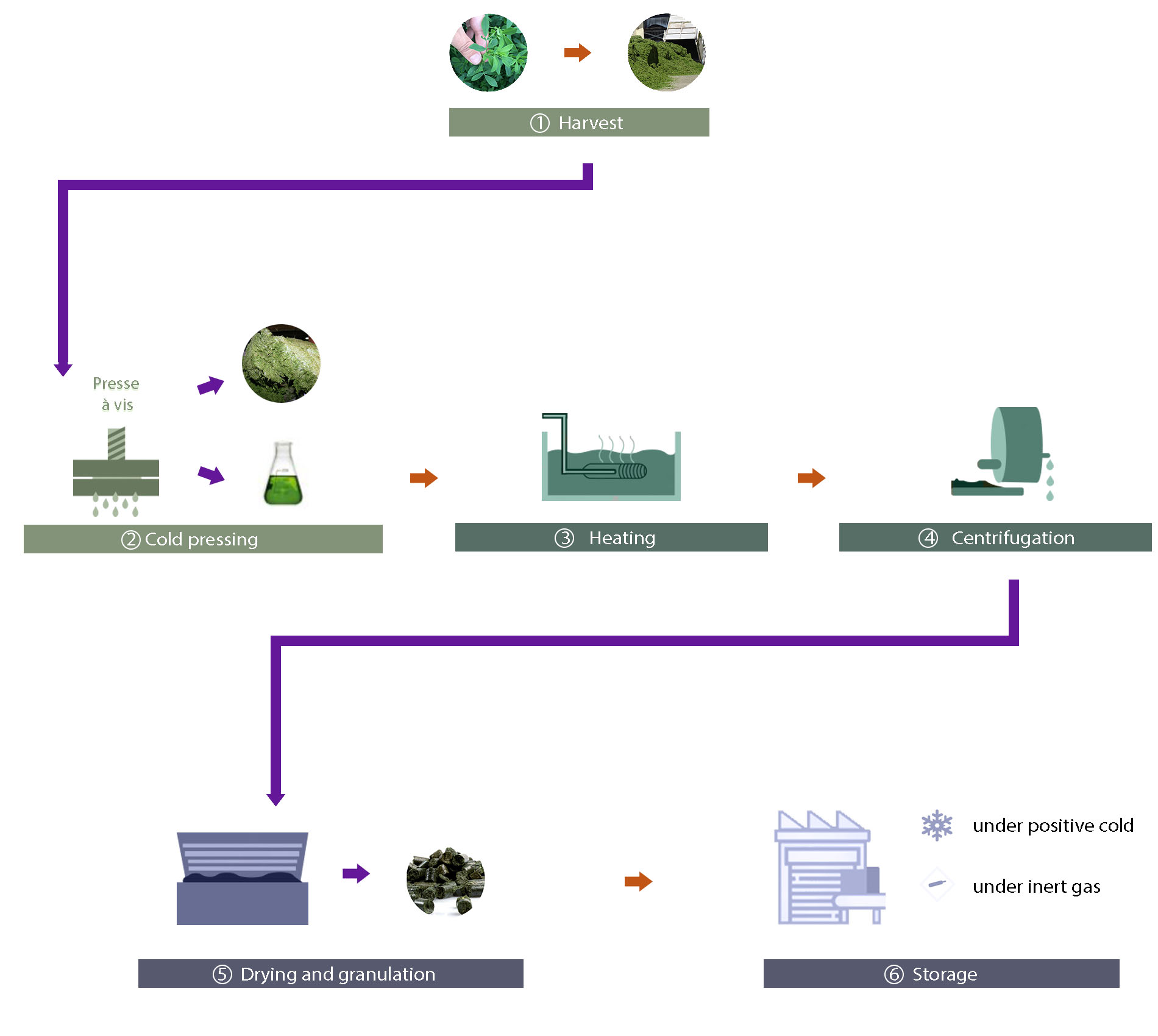
The process consists of a sequence of physical stages, which preserve the plant’s intrinsic qualities as far as possible. Results: a healthy, natural product, which meets the new health quality requirements.
During the process, the product is not, at any time, in contact with synthetic solvent to facilitate extraction or increase pigment concentration.
1- Harvest
Respecting the harvest timetable is a fundamental part of quality.
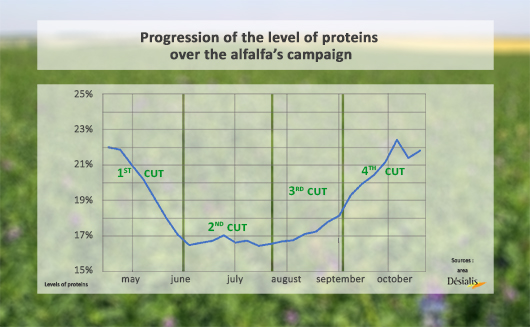
It is drawn up to optimise transformation of the plant according to its vegetative stage. For better quality dehydrated products, we undertake to respect the cutting timetable for each raw material. To obtain the most suitable plant for manufacture of our various commercial qualities.
Example of alfalfa cutting timetable:
Alfalfa wilting
A process which consists of natural drying to lower the average humidity level of the alfalfa before dehydration, without altering its nutritional qualities.
2- Cold pressing
The alfalfa is harvested in several successive cuts, from May to October. It is immediately transported to the factory, where the plant material is fragmented to release its constituents. It is then pressed to produce a green juice, rich in protein and pigments.
3- Heating
The juice is heated to coagulate the protein. Preheating followed by an injection of steam flocculates most of the protein present, which forms a proteinaceous coagulum.
4- Centrifugation
This is all centrifuged to separate the coagulum from the liquid part.
The pigments (lipidic) in the juice are carried along with the paste obtained from the protein coagulum.
5- Drying and granulation
This paste is dried on a fluidised bed and granulated at sufficiently low temperatures to preserve the CAE composition.
Cooling takes place on leaving the dryer to stabilise the product.
6- Storage
Since the CAE is produced within six months of the alfalfa harvest, it can be stored for one year at specialist storage sites. This stage is subject to more attentive treatment to guarantee perfect preservation of the CAE properties, thus meeting customers’ requirements.
Carotenes and xanthophylls are sensitive to oxidation
Rich in double carbon-carbon bonds, carotenes and xanthophylls are particularly sensitive to oxidation.
This oxidation reaction is initiated and maintained by light, heat and oxygen in the air. During the initiation phase, the reaction is slow, then it intensifies exponentially: this is an autocatalytic reaction.
Three action levers
To slow these degradation reactions as much as possible, the storage techniques use three effective levers:
Darkness: once produced, CAE pigments are no longer exposed to UV from light, from the storage cell to final packaging.
Aerobic micro: CAE is stored in cells with a modified atmosphere. Continuous nitrogen inerting controls and minimises the quantity of oxygen in contact with the pigments.
Cold: lowering the temperatures slows oxidation reactions. The CAE is cooled, then stored under positive cold conditions.
Désialis has developed two storage systems
Storage in inert gas (nitrogen), has been used for many years and is specially designed to preserve all the nutritional values in CAE. This system leads to 70% retention of xanthophylls. Depending on the factory production rate, the product is placed under nitrogen after manufacture.
Storage in positive cold significantly slows xanthophyll oxidation reactions. It also reduces the risk of mould development.
Degradation curve in inert gas and comparison with storage in free air (in the dark)Degradation curve in positive cold.
These processes guarantee the level of Total Xanthophylls (or Lutein-Zeaxanthin).
Dehydration process of alfalfa
Dehydration process of alfalfa
A natural source of protein, alfalfa has been used as animal feed for more than 9000 years.
Dehydration, a unique drying process, is used for conservation and preservation of the fresh plant’s nutritional qualities.
The constant improvement in dehydration, storage and homogenisation techniques has led to the diversification of qualities offered, expanding alfalfa consumption to all animal species.
The transformation of alfalfa is a natural, additive-free process.
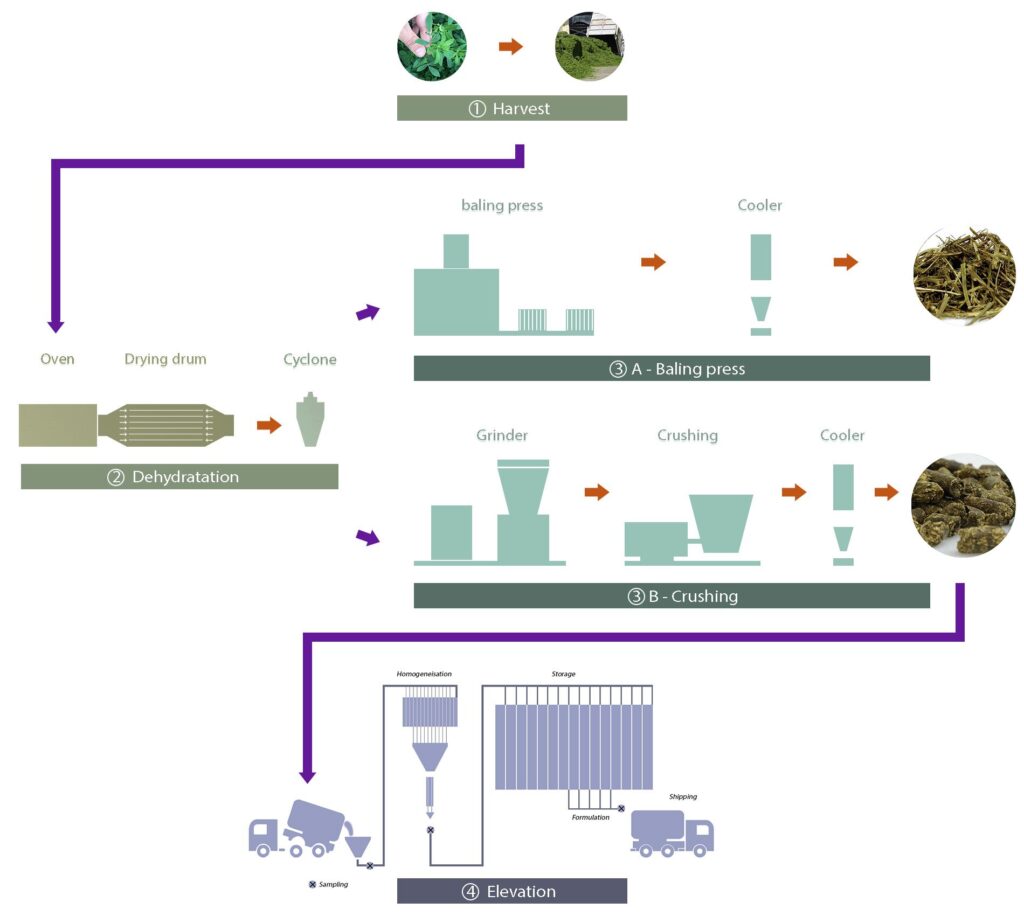
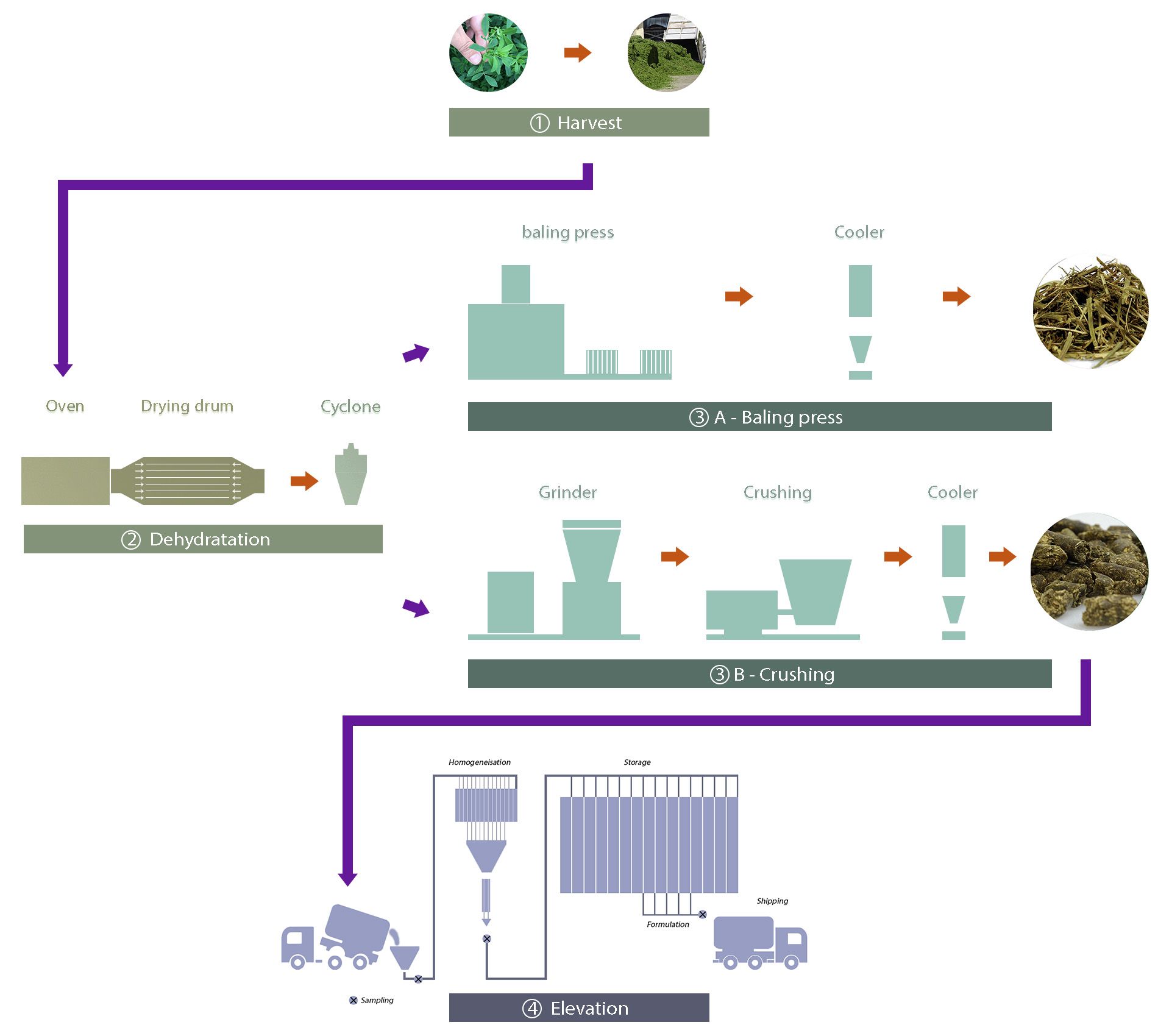
1- Harvest
Respecting the harvest timetable is a fundamental part of quality.
It is drawn up to optimise transformation of the plant according to its vegetative stage. For better quality dehydrated products, we undertake to respect the cutting timetable for each raw material. To obtain the most suitable plant for manufacture of our various commercial qualities.
Example of alfalfa cutting timetable:
Alfalfa wilting
A process which consists of natural drying to lower the average humidity level of the alfalfa before dehydration, without altering its nutritional qualities.
2- Dehydration
Reduced by 75% to 50% moisture, the alfalfa wilted are transported to the dewatering, where they are dried in a rotary drum dryer.
With a current of hot air (between 250° and 600°C in dryer entrance), these are brought alfalfa to 10% moisture and then crushed.
3- Manufacture of commercial qualities
Dehydrated alfalfa in pellets
Crushing : On leaving the rotary drum dryer the alfalfa is crushed. The flour obtained is put into granulation presses to be agglomerated into pellets of different diameters 6 mm.
Fibre in bales: long-strand alfalfa in bales
At the exit of the drum dryer, the dried alfalfa uncrushed are oriented presses trunk to be packed in bales of 370 kg.
To produce RUMIPLUS, delicate (alfalfa leaves rich in protein), are retrieved, sorted, granulated (pellet of 6 mm) and reintroduced into bales of 420 kg.
4- Elevation
The dehydrated alfalfa is sent to our silos where it is homogenised, stored and formulated to obtain our commercial specialities.
Used to manage the variability of the qualities received (cuts and factory productions).
Homogenisation:
Consists of mixing the different qualities of alfalfa received to obtain homogeneous batches.
Storage:
The homogenised batches are checked, analysed and identified, then stored in dedicated cells.
Formulation:
Formulation, by mixing different homogenised batches (of identified, listed qualities), leads to the manufacture of our different commercial specialities, which will be guaranteed by contract.
Legal information
Legal information and personal data
1. Site presentation
In accordance with article 6 of law n° 2004-575 of 21 June 2004 concerning confidence in the digital economy, the identity of the different entities involved in producing and maintaining the www.desialis.com website is provided for users :
Creator: Agence LUXURY CONCEPT
Editeur :
Désialis – SAS – 12 rue de Ponthieu 75008 Paris
Tél. +33 (0)142990101
registered in the PARIS Chamber of Commerce under number B 431 232 149
Share cpital : 501 072 Euros
Publication manager: Claude Billot – info@desialis.com
The publication manager is a physical person or a corporation.
Webmaster: Claude Billot – info@desialis.com
Host: OVH – 2 rue Kellermann – 59100 Roubaix – France.
2. General terms of use of the sites and services proposed
Use of the www.desialis.com website assumes full and complete acceptance of the following general terms of use. These terms of use are liable to be modified or completed at any time; users of the www.desialis.com website are therefore asked to check them regularly.
This site is usually accessible to users at all times. Interruption for technical maintenance may occur on decision by www.desialis.com, and users will be informed in advance of the dates and times of such operations.
www.desialis.com is regularly updated by Claude Billot. The legal information may also be modified at any time: nevertheless, it is enforceable for users who should consult it as often as possible to stay up to date.
3. Description of the services provided
www.desialis.com is intended to provide information concerning all the company’s activities.
Désialis works to provide the www.desialis.com website with information which is as accurate as possible. However, they cannot be held responsible for omissions, inaccuracies or deficiencies in the update, whether done by the company or third party partners providing this information.
All the information provided on the www.desialis.com site is given for information and liable to change. Moreover, the information provided on www.desialis.com is not exhaustive. It is given with reservations concerning modifications which have taken place since it was put on-line.
4. Contractual limits concerning technical data
The site uses JavaScript technology.
The website cannot be held responsible for material damage linked to using the site. Furthermore, site users undertake to access the site using recent hardware which is virus-free and an upgraded, latest-generation browser.
5. Intellectual property and infringements
Désialis is the holder of the intellectual property rights or has user rights for all the accessible components of the site, notably text, images, graphics, logo, icons, audio, software.
Any duplication, representation, modification, publication, adaptation of all or part of the site components, by whatever means or process, is prohibited without first obtaining the written authorisation of: Désialis.
Any unauthorised use of the site or any of its components will be considered an infringement and legal action will be taken in accordance with the provisions of articles L.335-2 and following of the Intellectual Property Code.
6. Limits of responsibility
Désialis cannot be held responsible for direct or indirect damage caused to the user’s hardware when accessing the Désialis website, resulting either from the use of hardware which does not meet the specification described in point 4, or owing to a bug or other incompatibility.
Neither can Désialis be held responsible for indirect damage (for example, losing a contract or opportunity) after using the www.desialis.com website.
Interactive areas (where you can ask questions in a contact space) are available to users. Désialis reserves the right to delete any content placed in this space which contravenes legislation applicable in France, without prior official notification, particularly concerning data protection provisions. Where necessary, Désialis also reserves the right to question the user’s civil and/or penal liability, notably in the event of messages with racist, offensive, defamatory or pornographic content, no matter what medium is used (text, photo, etc.).
7. Protection of personal data
Collection of personal data
DESIALIS is required to collect personal data about you when you fill in the contact forms or subscribe to our newsletter.
The mandatory or optional nature of the answers is indicated in the forms with or without the addition of a *.
DESIALIS may collect personal data about you indirectly through Cookies and / or from external partners that have obtained your authorization to exchange them. DESIALIS will only use this data for the purpose of sending newsletters. This newsletter will include an option to allow you to unsubscribe.
During the use of the site www.desialis.com, the following may be collected: the URL of the links through which the user accessed the site www.desialis.com, the service provider of the user, the Internet Protocol (IP) address of the user.
Recipients of your data
When requesting a newsletter, only the DESIALIS marketing department will have access to your data. When you fill out an application via the contact form, the service involved in your request will receive communications from your data to enable it to process and respond to your request.
Your e-mail address may be sent to DESIALIS partners when you have formally accepted it.
Purpose of collection and processing of these data by DESIALIS and retention of personal data
- Contact form :
The personal data that you will have to transmit during the writing of a contact form will only be used for the purpose of responding to your request.
Data not used for a year are erased from our databases.
- Newsletters:
Your email address will be used for the sole purpose of sending you our newsletter.
Your email address will be erased on simple request, directly on the mail by the option “unsubscribe”, or on request via the mail info@desialis.fr, or 3 years after the last opening of one of our emails.
- URL, ISP, IP address:
These data are intended to facilitate subsequent navigation on the site, and are also intended to allow various measures of attendance. They are erased within 50 months after the connection.
Rights granted to persons
In accordance with the French and European regulations on the protection of personal data, you have a right of access to personal data about you. You also have a right of rectification and a right to delete personal data about you that are inaccurate, incomplete, equivocal, outdated, or whose collection, use, disclosure or storage is prohibited. You can also oppose the processing of your data.
You can exercise your rights, by contacting us at the following address: info@desialis.fr.
No personal information about users of the www.desialis.com website is published on the user’s request, or exchanged, transferred, transmitted or sold to third parties using any kind of medium. Only the hypothetical repurchase of desialis and its rights would be lead to the transmission of the said information to the purchaser, who would be in turn, be bound by the same obligation relating to preservation and modification of user’s data to the website www.desialis.com.
The databases are protected by the provisions of the law of 1st July 1998 transposing directive 96/9 of 11 March 1996 relative to legal database protection.
8. Hypertext links and cookies
www.desialis.com contains a certain number of hypertext links to other sites, installed with Désialis’ authorisation. However, Désialis does not have the possibility of checking the content of the sites visited via these links and cannot, therefore, be held responsible for it.
Navigation through www.desialis.com is likely to lead to the installation of cookie(s) on the user’s computer. A cookie is a small file which does not identify the user, but records information concerning a computer’s navigation on a site. The data thus obtained are intended to facilitate future navigation on the site and also to measure frequentation.
Refusal to install a cookie can make it impossible to access certain services. However, users can configure their computer as follows, to refuse cookie installation:
In Internet Explorer: tab tools/Internet options. Click on Confidentiality and choose Block all cookies. Confirm with OK.
In Netscape: tab edit/preferences. Click on Advanced and choose Deactivate cookies. Confirm with OK.
9. Applicable law and attribution of jurisdiction
Any litigation related to the use of the www.desialis.com website is subject to French law. The Paris courts hold exclusive jurisdiction.
10. The main laws concerned
Law n° 78-87 of 6 January 1978, notably modified by law n° 2004-801 of 6 August 2004 relative to computers, files and liberties.
Law n° 2004-575 of 21 June 2004 for confidence in the digital economy.
11. Glossary
User: Person connected to the Internet, using the above-named site.
Personal information: “information which leads to the identification of the physical people to whom it applies”, in any form, directly or not (article 4 of law n° 78-17 of 6 January 1978).
What is Quality for us ?

The role of the Quality Department is to ensure the smooth interaction and fluidity of all processes, both for the client and for the teams involved.
PULPOTOP
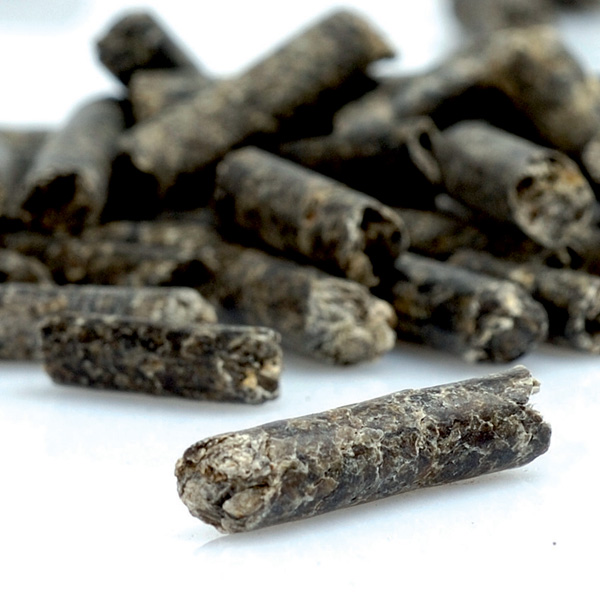
A safe energy source
WEEFIRST
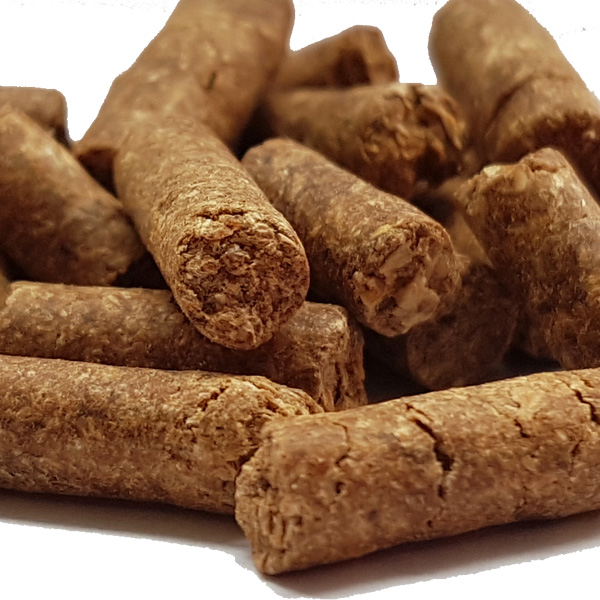
An optimised source of energy and protein
Profile
Founded in 2004, Désialis was born out of a collective approach by alfalfa to develop sales of their French dehydrated products intended for animal nutrition.
Modern and efficient production facilities, all part of a sustainable development approach, control the technologies and processes, and allow Désialis to offer safe products that comply with standards, suited to the increasing requirements of animal nutrition.
From the agronomic pathway of the plants through to factory processing and sale of the products, each stage is defined and strictly controlled.
Storage, formulation and blending silos ensure the availability of our products, safety of supply and a perfect match between production and the needs of our customers.
Désialis has developed a strong product segmentation policy in order to be able to anticipate and meet the requirements of various animal sectors. A strategy that is consistent with our market approach: constantly adapting our products to the demands of our markets.
Part of our sales are now exported, the result of a globalised geographical positioning of our markets that we will pursue and develop to meet these new needs.
Autumnal exhibitions 2017
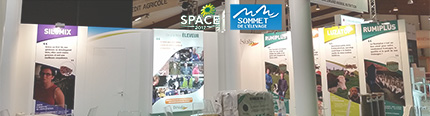
Unavoidable exhibitions of animal productions, SPACE at the beginning of September and the Sommet de l’Elevage at the beginning of October are the beginning of the new season for the French and international agricultural world. An opportunity not to be missed to meet our team!